Sleep well - be well
Review, reflect and make positive changes to your day-to-day routine to help you improve your sleep.

Written by Simplyhealth on 5/3/2021
Clinically reviewed by Macarena Staudenmaier on 9/10/2026
We all need the right amount of sleep to be at the top of our game. On average, healthy adults need 7-9 hours of sleep for their bodies to carry out essential maintenance and housekeeping. Over time, sleep deprivation can have implications for your health as your mind and body begin to act unusually. Here at Simplyhealth, we want to share some top tips to help you achieve a better night’s sleep and support your overall wellbeing.
What happens when you don’t get enough sleep?
Your mind: sleeping badly can impact your ability to concentrate or think clearly. It can also result in mood swings and feelings of irritability.1
Your body: a poor night’s sleep can make you feel tired the next day. Longer periods of poor sleep can affect your day-to-day life, making everyday tasks and maintaining a social life more difficult.1 Over time, regularly not getting enough sleep is also linked with an increased risk of high blood pressure, heart disease, stroke, obesity and type 2 diabetes.2

Why can’t you sleep well?
You’re not alone. A large study of adults aged 38-71 in England found that around three in ten people reported regularly experiencing insomnia symptoms.3, 4 Mental health can play a big part, alongside musculoskeletal issues (not to mention how the land of Nod can turn upside down when a new baby arrives).

Top tips on how to sleep well
These low-tech, low-cost tips are intended to help improve your sleep hygiene and open doors to a well-rested and refreshed life. If your sleep problems develop more significant symptoms, these may help – but medical advice may also be advisable.
1. Your bedroom
Give your bedroom a performance review: darkness, quiet and a comfortable temperature deliver the ideal environment. For cost-effective aids, think eye masks and ear plugs.
2. Your lifestyle
A daily routine jam-packed with positive habits will really pay off when it comes to getting a good night’s sleep: fresh air, natural light, physical exercise, as well as regular sleep patterns, will all contribute to better sleep.
3. Your worries
A clear mind equals a better night’s sleep: avoid trying to block out thoughts (which can come back to bite you). Instead, write a list of what’s on your mind or talk your problems out before your head hits the pillow.
4. Your diet
There are red flags to avoid for optimum sleep: Caffeine can interfere with sleep, so try to avoid coffee and other caffeinated drinks for around 9 hours before bedtime.5 Night-workers especially should carefully consider the timings of their caffeine intake during their shifts.6
Alcohol may make it easier for you to fall asleep, but as a result, your time asleep is less effective.7
5. Your wind-down
Your pre-bed routine needs to be tailored to your own state of mind: some people find a warm bath, gentle yoga or meditation relaxing, whilst others swear by an embargo on phones, screens and news reports. The main thing is to find what works for you and stick to it.
Sleep diary: If you want to improve your sleep, try keeping a diary to help keep track of your daily routines and sleeping behaviours. After a couple of weeks, you might just uncover some habits or activities which are contributing to your lack of sleep.
Interactive sleep diary
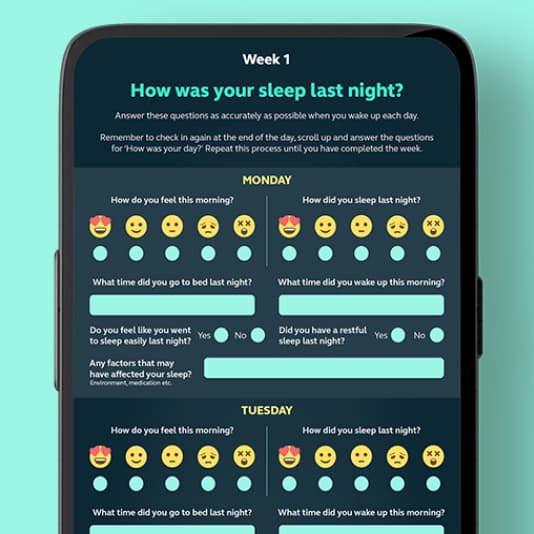
This interactive sleep diary is designed to help you identify patterns in your daily routine, such as your caffeine and alcohol intake, bedtime routine and sleeping environment, which may affect your sleep. The diary features 4 weeks’ worth of diary pages, including questions about how your day was, followed by your night’s sleep that followed. Once completed, you'll have the opportunity to review, reflect and make positive changes to your day-to-day routine to help you improve your sleep.
Support from Simplyhealth
Our health plans offer a range of resources and services to help our customers look after their everyday wellbeing, including support for sleep issues. The support below is accessible via the Simplyhealth app and their online accounts.
24/7 mental health support and information services are available to provide in-the-moment emotional support for those who may be struggling to cope with the impact that lack of sleep is having on their everyday life.
A 24/7 online video GP service. GPs are on hand to listen and offer guidance on the next steps to help improve sleep or any other health concerns.
Parts of these services are provided by a third-party supplier.
The 1-2-3 Health Plan
To enjoy 24/7 online GP access and much more, get our 1-2-3 Health Plan from just £25.10 a month.
This material may contain links to other websites operated by third parties. It is the responsibility of third parties to ensure such material and websites comply with all relevant laws and regulations. To the maximum extent permissible by law Simplyhealth disclaims all responsibility for such websites.
This material may contain links to other websites operated by third parties. It is the responsibility of third parties to ensure such material and websites comply with all relevant laws and regulations. To the maximum extent permissible by law Simplyhealth disclaims all responsibility for such websites.